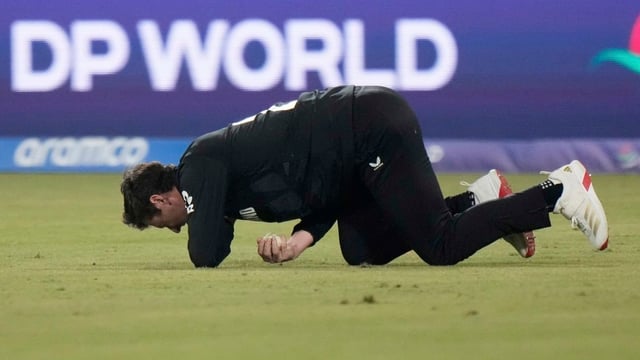
Matt Henry's Crucial Departure: A Family Milestone Amidst World Cup Pressure
In a move that sends ripples through the cricketing world, New Zealand's formidable fast bowler, Matt Henry, has departed from the Black Caps' T20 World Cup squad. His reason? A deeply personal one: to be with his wife, Holly, for the birth of their second child. This decision, made on the heels of New Zealand's Super Eights defeat against England, highlights the delicate balance professional athletes navigate between career commitments and significant family milestones. While admirable, Henry's exit introduces a layer of uncertainty for the Black Caps, whose semi-final qualification hinges on a complex web of external results.
Henry has been a pivotal figure in New Zealand's campaign, consistently delivering crucial breakthroughs. Across five matches, he has scalped six wickets at an average of 22.17, maintaining a commendable economy rate of 7.39. His ability to provide early wickets and control the flow of runs in the powerplay makes him an indispensable asset. Against England, he managed to pick up the key wicket of Phil Salt, demonstrating his continued impact even in a losing effort.
The decision for Henry to return home was met with full support from head coach Rob Walter. "Firstly, we're all very excited for Matt and Holly on the arrival of their second child," Walter stated, underscoring the team's understanding and compassion. "It's a very significant moment for their family and we're wishing them all the best. There's a lot of water to go under the bridge but we're hopeful that the stars align for the team and for Matt and that we'll see him back competing in the final phases of the competition." This sentiment reflects a modern approach to player welfare, acknowledging that personal well-being is paramount, even in the high-stakes environment of a World Cup. However, the conditional nature of his return – "depending on the team’s semi-final qualification" – adds a dramatic twist to New Zealand’s tournament journey.
Black Caps' Semi-Final Hopes: A Convoluted Path Without a Key Pacer
New Zealand's path to the semi-finals was already precarious before Henry's departure. A stinging four-wicket loss to England in their final Super Eights Group 2 match left their fate out of their hands. The Black Caps had initially hoped for a straightforward qualification by defeating England, but that opportunity slipped away. Now, their progression hinges entirely on the outcome of the Super Eights clash between co-hosts Sri Lanka and Pakistan.
The "pre-match mathematics," as detailed by New Zealand Cricket (NZC), painted a clear but challenging picture for Pakistan. To usurp New Zealand's potential semi-final berth, Pakistan would need to achieve a dominant victory: either defeat Sri Lanka by a massive 64-run margin or chase down any target in a blistering 13.1 overs (though this could fluctuate based on the first innings total). If Pakistan fails to meet these demanding criteria, New Zealand will secure their spot in the semi-finals.
This reliance on another team's performance, coupled with the absence of a bowler of Henry's calibre, creates an unsettling scenario for the Black Caps. Should they qualify, they would face a semi-final clash potentially without one of their primary strike weapons. Henry's ability to extract bounce and movement, combined with his experience in high-pressure matches, would be sorely missed. His departure is a gamble, not necessarily one taken by the Black Caps in terms of strategy, but rather an unavoidable circumstance that thrusts them into a position of needing other bowlers to step up significantly on the grandest stage. The depth of the squad will be tested, and the remaining pacers will bear the added responsibility of filling the void left by Henry's consistent performance.
The Evolving Landscape of Cricketer Parental Leave: Supporting Athletes Beyond the Field
Matt Henry's decision to take parental leave, fully supported by New Zealand Cricket, underscores a significant and welcome shift in professional sports. The concept of
cricketer parental leave is gaining increasing prominence, reflecting a broader recognition that athletes are not just performers but also individuals with families and personal responsibilities. This progressive stance by cricket boards, particularly NZC, sets a vital precedent for athlete welfare.
In an era where the demands of international cricket are more rigorous than ever, ensuring players have the space and support to attend to life's major milestones is crucial. Historically, athletes often had to make agonizing choices between their careers and family events. However, modern sports organizations are increasingly understanding the long-term benefits of prioritizing player well-being. Providing leave for childbirth, for instance, can significantly boost morale, reduce stress, and foster greater loyalty and commitment from players towards their teams. It sends a clear message that the organization values its employees holistically.
New Zealand Cricket has often been at the forefront of implementing player-friendly policies. Their support for Henry in this crucial T20 World Cup moment is a testament to their commitment to creating an environment where players feel supported and understood. This progressive outlook helps in attracting and retaining top talent, as players are more likely to thrive in an ecosystem that respects their personal lives. For a deeper dive into how this decision impacts the team and player welfare, explore related discussions like
Matt Henry Takes Parental Leave From T20 World Cup: NZ's Semi-Final Hopes and
Family First: Matt Henry's T20 World Cup Parental Leave Decision.
Practical Tips for Sports Organizations on Parental Leave:
- Clear Policies: Establish well-defined parental leave policies that outline eligibility, duration, and conditions for return, ensuring transparency and fairness.
- Squad Depth Planning: Proactively manage squad rotation and development to ensure sufficient depth, allowing for key players to take leave without critically undermining team performance.
- Open Communication: Foster an environment where players feel comfortable discussing personal life events with coaches and management, enabling better planning.
- Support Systems: Provide resources for players and their families, such as counselling services, travel assistance, or flexible training schedules.
- Lead by Example: Senior management and coaches should openly support and promote these policies, reinforcing a culture of family-friendliness.
What Next for Henry and New Zealand? Potential Scenarios and Strategic Adjustments
The immediate future for both Matt Henry and the Black Caps remains fluid and dependent on external factors. Should Pakistan fail to achieve the improbable against Sri Lanka, New Zealand will indeed qualify for the semi-finals. The question then becomes: can Matt Henry rejoin the squad? Coach Walter's statement about hoping "the stars align" suggests a desire for his return, but the logistics and timing would be incredibly tight.
A trans-continental flight, acclimatization, and re-entry into a high-stakes competitive environment within a matter of days after a significant personal event would be challenging for any athlete. While Henry is a professional, the physical and emotional toll might be considerable. If he does return, his immediate form and readiness would be under intense scrutiny.
In Henry's potential absence, the Black Caps would need other members of their pace attack to elevate their game. The likes of Trent Boult, Lockie Ferguson, and Tim Southee (if selected) would carry an even heavier burden. This scenario provides an opportunity for younger or less experienced bowlers in the squad to step up and prove their mettle on a global stage. It demands resilience, adaptability, and a collective belief that they can overcome the loss of a key player. This situation tests not just the cricketing skills but also the mental fortitude and cohesion of the entire squad.
The psychological impact on the team, while potentially a challenge, could also serve as a unifying factor. Playing for a teammate who is making a significant personal sacrifice can be a powerful motivator. It transforms the "gamble" from a passive wait-and-see into an active commitment to fight for their place and for Henry's potential return to the finals.
The Matt Henry situation is a poignant reminder of the human element in elite sport. While the T20 World Cup represents the pinnacle of cricketing ambition, the arrival of a new family member is an irreplaceable life event. New Zealand Cricket's supportive stance, amidst the high stakes of a semi-final qualification, is commendable. It underscores the evolving landscape of professional sport, where player welfare is increasingly prioritized, even if it introduces strategic complexities.
As the cricketing world waits for the outcome of the Pakistan vs. Sri Lanka match, the Black Caps are preparing for whatever comes next, with or without their star pacer. Their journey through this World Cup has become not just a test of cricketing skill, but also a testament to resilience, adaptability, and the enduring power of family. Whether Matt Henry rejoins them for the final phases or not, his decision and the support he received will undoubtedly leave a lasting mark on the narrative of this tournament and the broader discussion around cricketer parental leave.